You cannot ad-block
a billboard
22 July 2026 · Outdoor
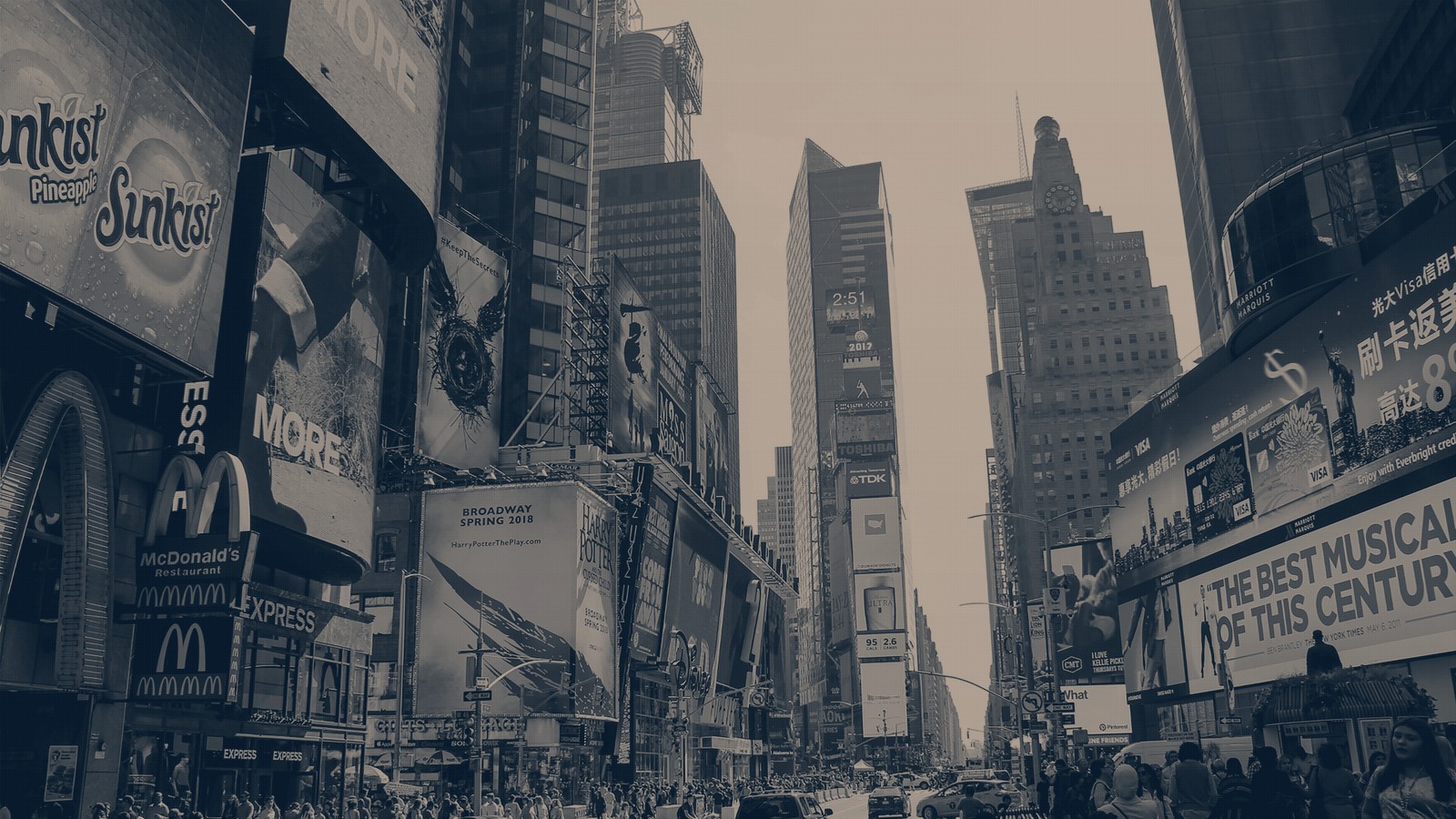
Every screen you buy now has a bouncer on the door. A skip button, an ad blocker, an AI agent that browses on your behalf so you never see the page. One screen has none of that. It just posted its best numbers in history.
Count the things standing between your ad and a person.
On YouTube, the skip button. On the open web, the ad blocker. In the inbox, the promotions tab. On the phone, the thumb moving at speed. And now the newest gatekeeper of all, the AI agent that reads twenty pages and comes back with the answer, so the human never loads the site, never sees the banner, never meets the brand.
Then there is the billboard. No skip button. No blocker. No tab to close. No agent walking down the street on your behalf. You cannot ad-block a wall.
That is not nostalgia. It is the one structural advantage outdoor has that every digital channel is quietly losing, and the money has noticed.
01Every other screen grew a gatekeeper
For thirty years the deal in advertising was simple. Put the ad where the eyes are and some of them land. That deal is breaking, one channel at a time, because the eyes learned to defend themselves.
Skippable pre-roll trained a whole generation to hover over the button before the ad even starts. Ad blockers sit on hundreds of millions of browsers and strip the banner before the page paints. Email filters shunt your carefully built campaign into a tab nobody opens. Paid social still works, but you are renting attention from a feed engineered to keep the scroll moving, which means your slot is a speed bump, not a stop.
And this year the funnel grew a new hole at the top. People stopped visiting websites and started sending an agent. Perplexity, ChatGPT, Claude in the browser. You ask, it goes, it reads the pages, it reports back. The browsing still happens. The human just is not the one doing it, and the human is the one you were paying to reach.
Every one of those is a filter between spend and person. Outdoor has none of them.
02The robot does not walk down the street
Here is the part the AI panic keeps missing. An agent can read every page on the open web in an afternoon. It cannot stand on a platform at Kings Cross. It cannot sit in traffic on the Westway. It cannot walk past a six sheet on the way into Tesco.
Out of home is bought in physical space and consumed by physical people, in the one context software cannot yet browse for you. There is no headless version of the morning commute. No plug-in that skips the escalator. The medium is immune to the exact thing hollowing out digital reach, not because it is clever, but because it is real.
That is also why it survives the ad blocker and the skip button. You cannot filter a wall you are walking past. You cannot mute a screen the size of a bus. The only way to avoid it is to not be there, and people are there, in record numbers, every single day.
03The money is not sentimental
If this were sentiment, the numbers would be soft. They are the opposite.
UK out of home revenue hit £1.44bn in 2025, the highest annual figure the medium has ever recorded, up 2.6% on the year. That was collated by PwC for Outsmart, the industry body, so it is a counted number, not a claim. Digital screens now take 67% of that spend and grew 3.2%. Even classic paper and paste grew.
Then 2026 opened with a jump. First quarter revenue reached £341.2m, up 15% year on year. Digital out of home rose 17.6%. Classic rose 10.1%. Growth in the back half of 2025 ran at nearly double the front half, and the new year accelerated from there.
Read the PwC line on why. Dan Bunyan, the partner who signs off the figures, put it plainly: out of home has continued to prove its value to brands despite the challenging macroeconomic backdrop and disruption from new AI models. He named the robot. The medium grew anyway. Money moving at 15% a quarter, into the one channel a robot cannot touch, is not a coincidence. It is a flight to the reachable.
04Unskippable is not the same as unmissable
Now the honest part, because a billboard is not a magic trick.
Unavoidable buys you the impression. It does not buy you the memory. A wall nobody can skip is still a wall nobody looks at if the work is beige, if the line takes four seconds to read at forty miles an hour, if the logo is hiding in a corner. The medium removes the gatekeeper. It does not do your job for you.
This is where most outdoor spend leaks. Brands treat the site as the achievement and the creative as an afterthought, then wonder why an unmissable format got missed. The screen is unskippable. The idea has to earn the two seconds anyway. Big thought, few words, one image, built to be read at a glance and remembered at the till.
Get that right and the maths flips in your favour. You are the only message in the person's eyeline that they did not consent to and cannot dismiss. That is the most valuable two seconds in media, and almost nobody treats it like it.
05What we would actually do
Stop thinking of outdoor as the old channel you add for reach and start thinking of it as the only channel with no exit.
Put the spend where the agents cannot go. The commute, the high street, the retail park, the walk from the car to the door. Physical journeys your audience makes with their eyes up.
Build for the glance, not the dwell. If it needs a second read, it has already lost. One idea, one image, a line you can catch mid-stride. The format is doing the reach. Your only job is to be worth the look.
Then let it prime everything else. The street impression is the one that still lands cleanly, so use it to introduce the brand the feed keeps burying and the agent keeps skipping. Met on a wall, recognised in the app.
Everyone is pouring budget into channels busy building better doors to keep ads out. The smart money is buying the one screen with no door at all.
We build outdoor that is worth the two seconds it cannot be skipped out of. Bring us the campaign, or see how we think about outdoor.